Modules
Data Analyst
Data Engineer
Product Data Scientist
AI Engineer
Machine Learning Engineer
Prompt Engineer
Alright, let's break down the INNER JOIN concept with something we're all familiar with - Facebook.

Nah let's just called it Facebook! Imagine Facebook has 2 main tables: one for user profiles (users) and another for the comments users make (users_comments).
| user_id | name | |
|---|---|---|
| 1 | Alice Johnson | alice@example.com |
| 2 | Bob Smith | bob@example.com |
| 3 | Carol Martinez | carol@example.com |
| 4 | David Lee | david@example.com |
| comment_id | user_id | comment |
|---|---|---|
| 101 | 1 | Loved the new movie! |
| 102 | 2 | Great game last night! |
| 103 | 1 | Can't wait for the weekend! |
| 104 | 3 | Happy birthday, Alice! |
Now, here's a common scenario: some users might be in the users table but have never made a comment. So, how do we find out who's commenting and what they're saying?
Let's use an INNER JOIN to link these two tables. This type of join will only show us the data where there's a match in both tables – basically, only the users who have made comments.
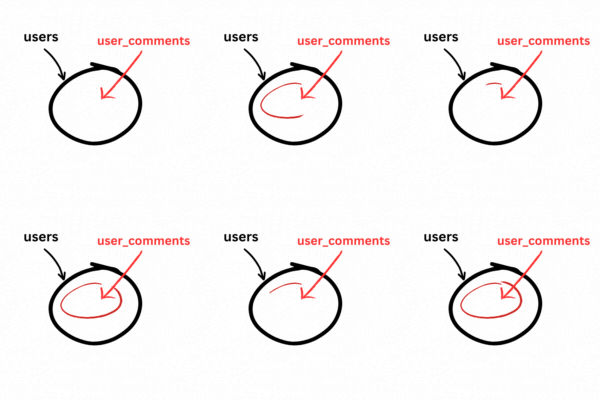
See the red circle are users that made at least 1 comment and the black circle are all users in the Facebook database. user_comments is inside the users table.
Here’s how we'd write this in SQL:
SELECT users.name AS user_name,
       users_comments.comment AS user_comment
  FROM users
  INNER JOIN users_comments
    ON users.user_id = users_comments.user_id;
The INNER JOIN is super useful for this. It ensures our results are clean and only show users who are in both tables.
Suppose, in addition to the users and users_comments tables, Facebook has a third table named comments_reactions, which tracks reactions (like, love, haha, etc.) to each comment.
| reaction_id | comment_id | reaction_type |
|---|---|---|
| 201 | 101 | Like |
| 202 | 102 | Love |
| 203 | 103 | Haha |
| 204 | 104 | Wow |
| 205 | 101 | Love |
Now, let's say we want to create a query that shows each user's name, their comment, and the reactions to that comment.
We would need to perform two INNER JOIN operations:
SELECT
    users.name AS username,
    users_comments.comment AS user_comment,
    comments_reactions.reaction_type AS comment_reaction
FROM users
INNER JOIN users_comments
           ON users.user_id = users_comments.user_id
INNER JOIN comments_reactions
           ON users_comments.comment_id = comments_reactions.comment_id;
This query clearly shows how to use multiple INNER JOINs to link related data across several tables in SQL!
You probably heard a lot about Joins, let's practice!